
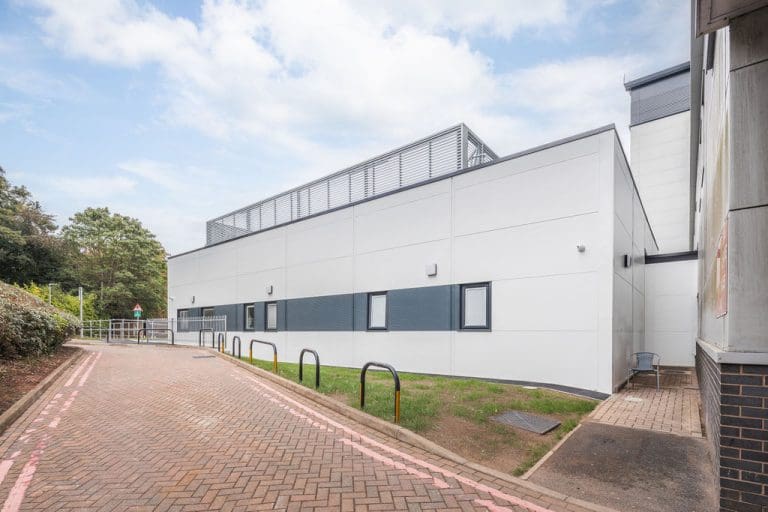
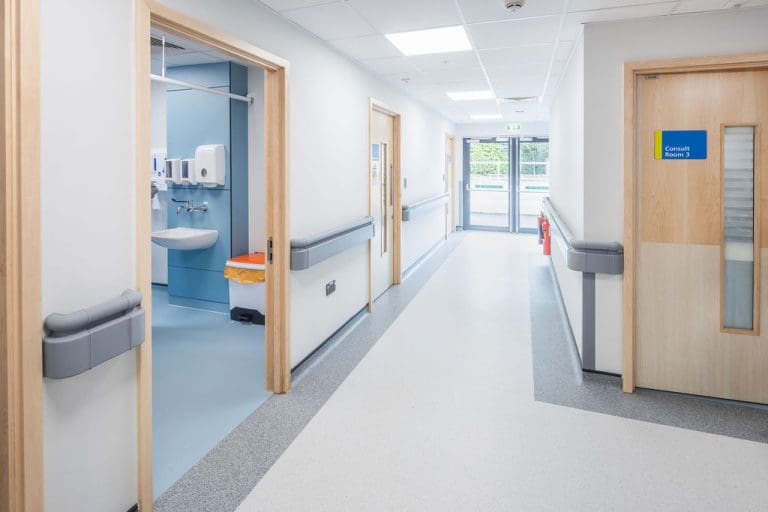
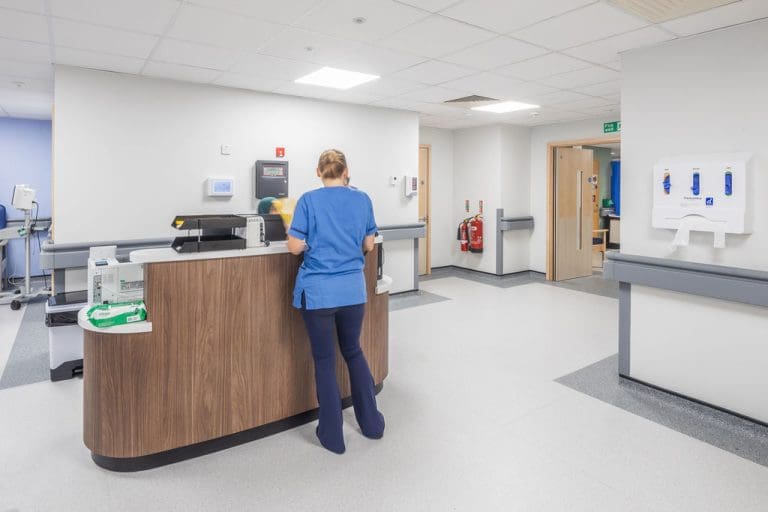
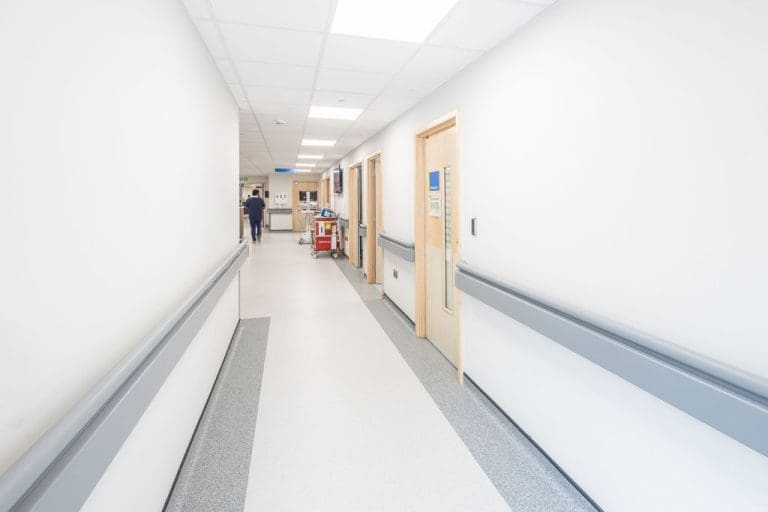
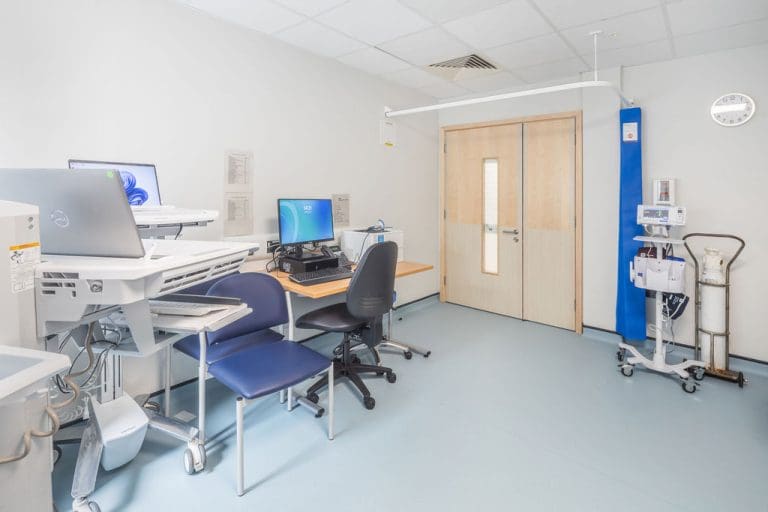
This project builds on McAvoy’s strong working relationship with University Hospitals Birmingham NHS Foundation Trust, following the successful delivery of 48-bed wards at Good Hope Hospital and Heartlands Hospital in 2022. Returning once again as a trusted partner, McAvoy is proud to deliver this vital facility which has helped the Trust expand capacity and enhance patient care.
Offsite solution
Delivered using our SmartCare® modular solution, seven modules were manufactured offsite and installed with 75% of works completed offsite. Installation took place over a weekend, with all modules craned into position in just 8 hours, significantly reducing disruption to live hospital site and surrounding area.
The MAU extension provides a range of high-quality facilities, including:
- Clean utility
- 5 consult rooms
- 2 consult/exam rooms
- Pharmacist space
- Quiet room
- Dirty utility
- Accessible toilet
- 33-person waiting area
To ensure a comfortable and safe environment, the facility also includes a standalone plant deck with a new Air Handling Unit (AHU), regulating temperature, humidity and air purity. McAvoy delivered the full internal fit-out, including IPS furniture for patients and staff, providing a ready-to-use solution.
Client-centred delivery
The Trust required a rapid, reliable solution that would enhance the delivery of urgent and emergency care.
From the outset, McAvoy worked closely with the client team to ensure seamless integration with existing facilities. Additional works included upgrading the catering block where an internal wall was converted into an external wall with an enhanced energy rating, demonstrating flexibility and a proactive response to evolving client requirements.
Challenges
Working in a live healthcare environment presented several challenges that required careful planning and coordination:
- Maintaining unrestricted ambulance access within the blue-light emergency zone.
- Managing pedestrian interfaces, as the extension is adjacent to busy public walkways and the A&E department.
- Developing detailed traffic management plans in collaboration with external authorities to minimise disruption.
- Proactive stakeholder engagement through newsletters, signage, and regular updates to staff, patients, and local residents.
Despite these complexities, hospital operations continued uninterrupted throughout, with patient and staff safety prioritised at every stage.
Building a sustainable future
The project achieved 99% waste diversion from landfill, with 530 tonnes of demolition and excavation waste recycled, and uncontaminated soil repurposed offsite. Connecting into the existing power supply, eliminated the need for temporary diesel generators, reducing carbon emissions and environmental impact.
Social value
Beyond the delivery of a high-quality healthcare facility, the project created lasting social and community benefits. Highlights included:
- 20% of the workforce was locally employed within a 15-mile radius of the site.
- Use of apprentices during both the factory build and site installation, providing valuable skills development.
- Appointment of local subcontractors and suppliers, with materials sourced nearby wherever possible.
- Organisation of staff site visits and regular communication with staff, patients and residents through newsletters, signage and information boards.